
Pediatric Psychiatric Exam Room: Evidence-Based VR Visualization
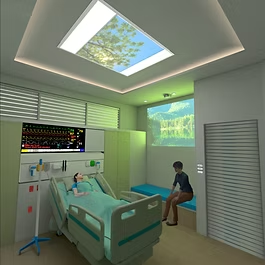
Validate healthcare architecture with VR. Divination Reality Labs visualizes evidence-based designs for pediatric psychiatric rooms, balancing safety with therapeutic needs.
Challenge
Designing behavioral health spaces for children requires a difficult balance: they must be strictly "ligature-resistant" to prevent self-harm, yet avoid feeling cold or institutional. Stakeholders needed to validate sightlines and the "feel" of the room before incurring construction costs.
Approach
We created a photorealistic VR walkthrough incorporating evidence-based design elements. This allowed architects and medical staff to virtually inhabit the space, testing the functionality of safety features and the emotional impact of the aesthetic choices.
Features
• BIM to VR pipeline
• True-scale walkthroughs
• Interactive fixtures & controls
• Evidence-based design elements for safety and ligature resistance
• Adjustable lighting and sensory features for different patient needs
• Visualization of rotating headwalls and secure storage systems
• Staff break areas modeled to support provider wellbeing
• Multi-stakeholder review: clinicians, architects, and researchers
From discovery to measurable outcomes
Discovery
Hospital leadership identified the training gap and defined success metrics with our team.
Design
We conducted cognitive task analysis and designed the simulation architecture around measurable learning objectives.
Build
Our developers created the environment in Unity while researchers integrated biometric tracking systems.
Validate
Multiple cohorts trained in the simulation. We collected performance data and compared outcomes to traditional methods.
Deploy
The hospital integrated the simulation into their residency program with ongoing data collection and refinement.